
ZERO CAVITIES. ZERO DOCTORS.
In The 1930s, A Dentist Traveled To 14 Isolated Tribes And Found People With 0% Disease And Perfect Teeth - Here's Exactly What They All Ate

What does real human health actually look like?
Not the kind sold in supplement ads. Not the kind promised by the latest diet trend. The kind that exists before civilization gets its hands on it.
In the 1930s, a dentist named Dr. Weston A. Price set out to answer exactly that question. He packed his bags and traveled across the globe - from the Swiss Alps to the Alaskan tundra, from the African savanna to the islands of the Pacific - to document isolated, traditional peoples who had never adopted modern food. What he found was both astonishing and deeply unsettling. Because what these people had, we have almost entirely lost.
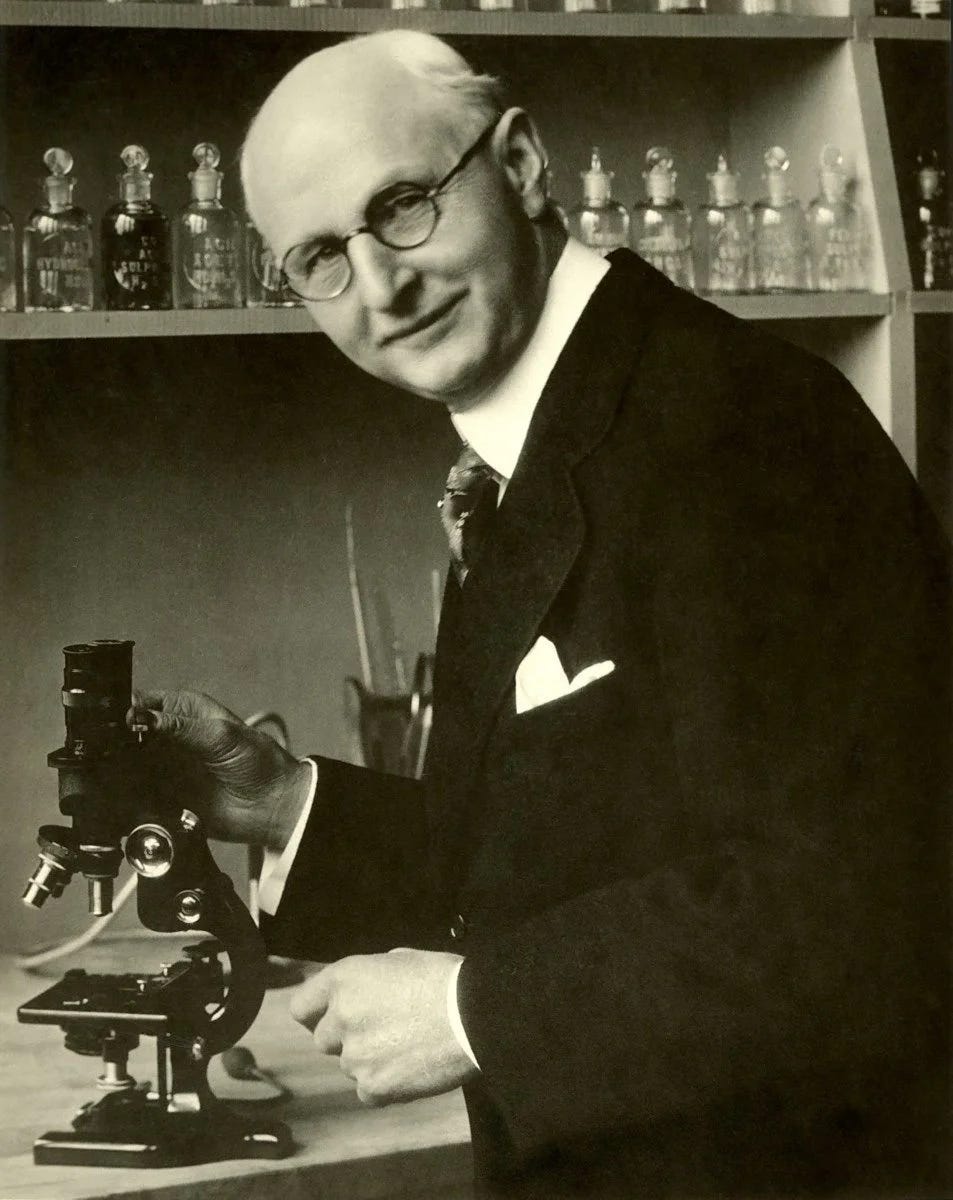
The Man Behind the Mission
Weston A. Price wasn’t a philosopher or a mystic. He was a practicing dentist, trained in clinical observation, who noticed something deeply wrong with his patients in the early 20th century: rampant tooth decay, crowded dental arches, narrow faces, and chronic disease. He suspected the cause wasn’t poor hygiene - it was food. And he went looking for proof.
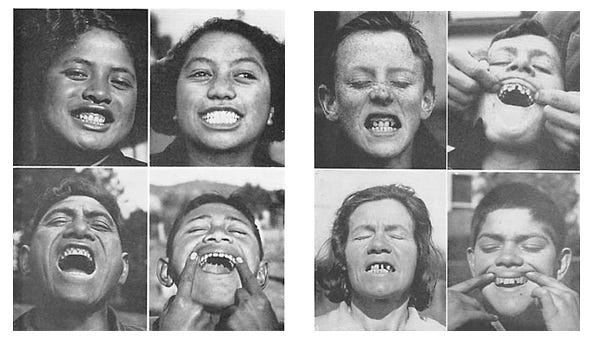
What he brought back wasn’t just data. It was photographs. Hundreds of them. Wide, symmetrical faces. Broad dental arches. Straight teeth with no cavities - in people who had never touched a toothbrush. These images remain some of the most powerful evidence ever collected that the human body, when fed correctly, expresses itself in a profoundly different way than what we consider “normal” today.
The Isolated Swiss: When Dairy Is Sacred
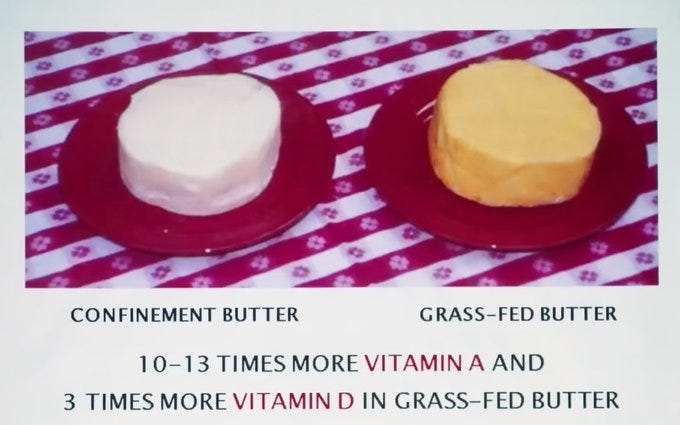
The first group Price studied were the Swiss villagers living in the Lötschen Valley - a remote alpine community largely cut off from the outside world. He called their butter “sacred.” And once you understand what it was, you understand why.
These people built their diet around raw dairy: raw milk, raw butter, raw cream, and raw cheese from cows grazing on some of the most mineral-rich alpine pasture in the world. Their most prized food was the first butter produced by cows after they returned to the high summer pastures - a deep orange, almost glowing substance saturated with fat-soluble vitamins. They called it something close to sacred. Price called it one of the most nutrient-dense foods he had ever encountered.
The results were extraordinary. Among 4,280 children, only 3.4% of teeth showed any signs of decay - and this was without toothbrushes, without dentists, without fluoride. There was not a single case of tuberculosis in the valley, despite the disease being rampant in the rest of Switzerland at the time. Children played barefoot in glacial runoff water. All farm labor was done by hand. No doctors were needed, because almost no one got sick.
The neighboring villages, which had access to white flour, canned goods, and sugar, told a completely different story: rampant tooth decay, tuberculosis, and deteriorating health. Same country. Same genetics. Different food.
The Gaelic Islanders: Fish, Oats and Extraordinary Teeth
In the Outer Hebrides - the storm-battered islands off the northwest coast of Scotland - Price found another isolated group living in ways their ancestors had for centuries. These people ate almost no dairy. Their diet was built around seafood: cod, shellfish, fish organs, cod liver, and fish eggs. They ate oatmeal porridge and oat cakes. Simple, repetitive, and deeply nourishing.
Only 0.7 to 1.3% of their teeth showed decay. They were lean, strong, and sober - a notable contrast to many communities in mainland Scotland. The islands with access to modern foods - white bread, jam, sugar, canned vegetables - had tooth decay rates of 32.4%. The difference between the two groups was not willpower or genetics. It was what they ate.
The Alaskan Inuit: 99% Raw, Nearly Zero Cavities
If the Swiss represent the power of raw dairy, the Alaskan Inuit represent something even more extreme: a population thriving almost entirely on raw animal food, in one of the harshest environments on Earth.
Price documented tooth decay rates of just 0.09% among traditional Inuit - a number so low it barely registers. These people ate salmon, seal, whale, and other marine animals, and they ate nearly all of it raw. Seal oil accompanied almost every meal. Dried fish eggs were stored in large quantities and considered among the most important foods, especially for pregnant women and growing children. Organ meats from caribou provided additional nutrition. Even fermented foods were part of the diet - a dish called kiviak, made from fermented birds stored inside a seal skin, delivered beneficial bacteria in abundance.
What Price also noted was the physical capacity of these people. One man was reportedly able to carry 100 pounds in each hand and grip another 100 pounds in his teeth. Inuit mothers gave birth without complication, one healthy baby after another. Children stripped off their clothes in Arctic temperatures and played in the snow - cold-adapted in ways that seem almost impossible by modern standards.
When these populations adopted imported processed foods, tooth decay jumped to between 18 and 33%. Tuberculosis - which had never touched the traditional communities - began to devastate them.
The Northern Canadian Indians: Organs Over Muscle Meat
In the Yukon, Price encountered indigenous Canadian tribes whose nutritional wisdom stopped him in his tracks. These people hunted moose, caribou, deer, and bear. They ate raw organs. They consumed marrow and fat with deliberate intention. And here is the detail that stands out most: the lean muscle meat was often fed to the dogs. The humans ate the organs, the fat, and the marrow - the parts of the animal that modern people throw away or never think to eat.
Their tooth decay rate was 0.16%. Their faces were broad, their dental arches wide, their bone structure remarkable. Price noted that the women gave birth alone in the wilderness, without assistance, without complication. Tuberculosis and arthritis were essentially unknown.
One of the most striking pieces of knowledge these people possessed was the use of moose adrenal glands to prevent scurvy. They knew - through generations of lived experience - that these glands were high in vitamin C. No laboratory. No nutritional science. Just ancestral knowledge, passed down and proven effective.
When modernization arrived, tooth decay rates climbed to between 25 and 54%. Births became complicated. C-sections became necessary. The diseases of civilization followed the foods of civilization.
The Pacific Islanders: Seafood as a Human Right
Price’s travels took him across Melanesia, Micronesia, and Polynesia - the vast island cultures of the Pacific. What he found, island after island, was the same pattern: extraordinarily low tooth decay, broad faces, wide dental arches, and diets built around seafood and starchy tubers.
The Melanesians, living across Papua New Guinea and Fiji, had tooth decay rates of 0.14%. Seafood was so central to their culture that even during warfare, inland people were permitted to travel to the coast to harvest it - a kind of nutritional ceasefire. They understood, without any formal science, that this food was essential. They ate octopus, crab, fish, sea cucumbers and shellfish, most of it raw. Taro, coconut, and native fruits rounded out the diet.
The Polynesians - Samoa, Tahiti, the Cook Islands, Tonga - showed tooth decay rates between 0.3 and 0.6%. Early Western scientists who encountered them described them as among the most physically perfect peoples in the world. Price went shark fishing with them. They hunted sharks from boats with spears.
Both groups applied coconut oil to their skin and believed it helped them absorb the sun’s nutrition. They were, in a sense, practicing ancestral photobiology without knowing the term.
Their modernized counterparts showed tooth decay rates between 18 and 37%. No dentists existed on many of these islands. Decay meant suffering with no remedy.
The African Pastoral Tribes: Raw Milk, Blood and Giants
Some of the most dramatic findings in Price’s entire body of work came from the pastoral tribes of Africa - groups like the Maasai, the Tutsi, the Nuer, and the Dinka, whose diets were built almost entirely around their cattle.
The Maasai of Kenya and Tanzania were already legendary for their physical stature and dominance. Price confirmed what many had observed: many chiefs stood over six feet tall, and some men approached seven feet. Their tooth decay rate was 0.4%. The local government physician reported that most Maasai were completely disease-free. Historically, they had dominated neighboring agricultural tribes - a fact Price connected directly to their superior nutrition.
Their diet was raw milk, raw blood drawn from living cattle, and raw meat about once a week. Organ meats were consumed regularly. Growing children and pregnant women received a daily ration of raw blood. Men ate the testicles of cattle, believing it supported their fertility and strength.
The Tutsi of Rwanda and the Muima tribe of Uganda showed similar results - 0% tooth decay observed in Price’s samples.
The Nuer of South Sudan were the tallest group Price encountered anywhere on Earth. Women stood over six feet. Men exceeded seven feet. Their diet was milk, blood and meat, supplemented with fish from the Nile River. They viewed liver as sacred - so sacred they refused to touch it with their hands. They believed that physical growth depended on how much liver a person consumed. Their tooth decay rate was 0.5%.
The Dinka, also of South Sudan, showed what Price considered the most balanced African diet: heavy on raw dairy, butter, and yogurt, supplemented with Nile fish and grains that were carefully processed to remove anti-nutrients. Price described the Dinka as the healthiest tribe he analyzed in all of Africa - not the tallest, but the strongest and most proportionate. Their balance of animal products and plant foods, he believed, was close to optimal.
The contrast with the agricultural tribes was stark. The Kikuyu and Wakamba of Kenya, who ate primarily plant-based diets with minimal animal food, showed tooth decay rates of 5.5% and 6.2% respectively. They were historically dominated by the Maasai. Their physical development was measurably inferior. Price drew a direct line between animal-based nutrition and physical dominance.
The Australian Aboriginals: Zero Cavities and Superhuman Senses
The Aboriginal peoples of Australia are among the oldest continuous civilizations on Earth, and Price found in them something remarkable: inland groups showed 0% tooth decay. Not low. Zero.
These people were extraordinary hunters. Price documented their ability to kill kangaroos with a thrown spear at point-blank accuracy, silently, without alerting nearby animals. Their eyesight was so acute that they could reportedly see the moons of Jupiter with the naked eye - something that normally requires a telescope. They could spot animals at distances that seemed impossible to observers from outside their culture.
They prioritized fat above all else. They tracked animal cycles and hunted specifically when animals were at their fattest. Lean meat was not the prize - fat was. The inland diet consisted of kangaroo, wallaby, rodents, birds, bird eggs, insects, local fruits, starchy tubers, and some nuts and seeds. Coastal groups added fish, dugong (sea cow), shellfish, and sea plants.
Among the elders, Price noted something else: full heads of hair. Balding was essentially absent. The connection between nutrition, hormonal health, and hair retention - something modern men spend billions trying to address - appeared to be a non-issue for people eating this way.
When modernization arrived, tooth decay jumped to between 24 and 53%. Dental arch deformities, previously unknown, appeared in 50% of children.
The Torres Strait Islanders and the Maori: Skulls That Tell the Truth
Between Australia and Papua New Guinea, the Torres Strait Islanders showed the same pattern: seafood-heavy diets, robust physical development, strong immunity and near-zero tooth decay. Fish, shellfish, dugong, turtles, sea plants, tropical fruits, coconuts, and root vegetables formed the foundation of their lives.
In New Zealand, Price did something unusual: he examined historic Maori skulls alongside living people. The skulls showed what the living population was losing. Wide palates. Perfect dental arches. Exceptional facial development. Early scientists had called the Maori among the finest physical specimens of any race on Earth.
A photograph of a Maori tribal elder in Price’s collection shows a face that looks almost architecturally different from what we consider normal today - the zygomatic bones high and wide, the jaw broad, the entire structure expressing what unrestricted genetic potential actually looks like when nutrition supports it.
Their traditional diet was seafood - fish, shellfish, seaweed - most of it raw. They hunted birds extensively, including the moa, a massive flightless bird they eventually hunted to extinction. They ate fern root starch and kumara, a form of sweet potato.
Their modernized counterparts showed the familiar collapse: tooth decay, narrowed faces, deteriorating immunity.
The Peruvians: Faces That Seem Impossible
Price’s final group was the indigenous peoples of Peru - both the highland Andeans and the Amazon jungle tribes. And it is here, in the Amazon, that he documented what may be the most striking facial development he encountered anywhere in the world.
The Peruvian Amazon Indians had faces so wide, so well-developed, that Price noted even he had never seen anything like it. Their zygomatic arches - the cheekbones - were extraordinarily prominent. Their dental arches were vast. Their faces looked, in the photographs, almost like a different species compared to modern urban populations.
Their diet was fish from the Amazon River, animals from the forest - monkeys, wild pigs, capybara - birds and bird eggs, large quantities of yuca (cassava starch), and jungle fruits. Animal protein and fat formed the foundation. Starch provided energy. Nothing was processed, nothing was synthetic.
The highland Andeans traded dried fish and fish eggs over hundreds of miles - carrying them from the coast up into the mountains because they understood, intuitively, that this food was irreplaceable. The Quechua people of the high Andes showed remarkable adaptation to altitude: larger lung capacity, more efficient oxygen use, and near-perfect dental health.
When modernization reached these populations, dental carries jumped to over 40%.
What All of These People Had in Common
Price spent years analyzing his findings. Across every culture, every climate, every continent, certain patterns emerged with striking consistency.
Animal flesh, fat, and organs were central to every healthy diet. Not peripheral. Not occasional. Central. And in nearly every case, the people specifically prized the fat - not the lean muscle, but the fat. The marrow. The organs. The parts of the animal that carry the highest concentration of fat-soluble vitamins: A, D, E, and K2.
Raw food was universal. Every group consumed some portion of their food raw - whether raw dairy, raw organs, raw meat, raw seafood, or raw fermented foods. Cooking was used, but it was not total. The enzymes, the bacteria, the undenatured proteins in raw food were part of the nutritional equation.
Seafood was treated as precious. Tribes went to extraordinary lengths to obtain it - trading dried fish eggs over mountain ranges, allowing enemies safe passage to coastal harvesting grounds during war. The omega-3 fatty acids, the DHA, the iodine, the fat-soluble vitamins in seafood were understood instinctively as irreplaceable.
Starchy tubers were consumed by almost every group. Taro, cassava, sweet potato, potato, yuca - these foods appeared across cultures as reliable energy sources. The modern fear of starch finds no support in the anthropological record. These people ate starch and were extraordinarily healthy.
Plant foods were always processed. Grains were soaked and fermented. Legumes were prepared carefully. Anti-nutrients were neutralized before consumption. The raw vegetables and processed grains of the modern diet are not what these people ate. Their plant foods were transformed before eating.
The environment mattered as much as the diet. These people were outside all day, exposed to natural light. They followed the rhythms of sunrise and sunset, sleeping when it was dark and waking when it was light. They had cold exposure. They moved constantly. They had no artificial electromagnetic fields disrupting their biology. The body does not exist in isolation from its environment - and these people lived inside their environment, not against it.
What This Means for Us
Price returned from his travels with a conclusion that was, and remains, deeply uncomfortable for modern medicine and the food industry: the diseases we consider inevitable - tooth decay, chronic fatigue, mental fog, hormonal dysfunction, difficult births, poor eyesight, balding, skin problems - are not inevitable at all. They are the predictable consequences of a specific way of eating and living that removes us from our biological design.
The isolated peoples he documented were not superhuman. They were simply eating and living in ways that matched what their bodies were built for. And when their descendants adopted modern food - white flour, sugar, canned goods, vegetable oils, pasteurized dairy - within a single generation, the faces narrowed, the teeth decayed, the immunity collapsed and the diseases of civilization arrived.
The transformation was not slow. It was rapid. Measurable
Hope you found some value in this. Have an awesome day!
–AncestralHealtz
Brilliant
Fascinating read. With all the raw seafood and raw meat I wonder about the parasites these tribes are exposed to, how it affects them, and how they treat it